For many people in the Czech Republic, Christmas is closely connected with snow, decorated trees, gifts, and busy Christmas markets. For people coming from other parts of the world, however, the meaning of Christmas can be shaped by very different traditions. Betesaida Kasmai, an Ethiopian student living in the Czech Republic, describes Christmas primarily as a spiritual and community-centered celebration rather than a material one.
Christmas as a Spiritual Experience
In Ethiopia, Christmas is deeply rooted in religion and is celebrated on January 7, following the Julian calendar. The period before Christmas is marked by a long fast. As Betesaida Kasmai explains, “We fast for 43 days… and during that time we have to go to church at midnight”.
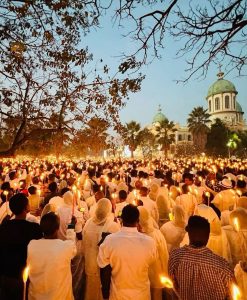
The midnight church service is the central moment of the celebration. People wear white clothing, light candles, and pray together. “That moment is when we break our fast. The next day is Christmas,” Kasmai says. When reflecting on Christmas back home, she emphasizes that the atmosphere itself is what matters most: “The vibe is very spiritual”.
Traditions Passed Through Generations
One distinctive Ethiopian Christmas tradition is Genna, a traditional game played on Christmas Day. According to Kasmai, it is “kind of similar to hockey,” but remains a male-only activity as part of long-standing tradition. Men wear traditional clothing, and the game is symbolic rather than competitive. “It’s not really about winning… it’s mostly about having fun and keeping traditions alive,” she explains.
Christmas in Ethiopia also takes place during summer. “In my country, it’s summer during Christmas. We don’t have snow,” Kasmai notes. Celebrating Christmas in daylight and warm weather creates a striking contrast to Central European winter traditions.
Food, Hospitality, and Togetherness
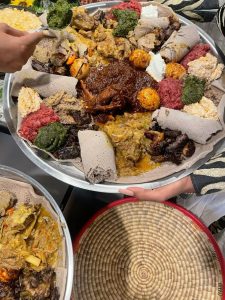
Family and community play a key role in Ethiopian Christmas celebrations. Traditional food, especially a spicy chicken stew served with injera, is prepared for the occasion. Hospitality is central: “We invite relatives, neighbors, anyone — even people who might be alone,” Kasmai says.
Gift-giving is not a defining feature of Christmas in Ethiopia. “Our Christmas is not based on physical gifts. It’s more about charity and gathering together,” she explains. Instead, families focus on sharing food and time, often including people without close family in their celebrations.
Decorations Without Decorations
Christmas decoration in Ethiopia looks very different from European practices. While Christmas trees are becoming more common today, they were not part of Kasmai’s family traditions. Instead, homes are decorated with fragrant grass spread across the floor. “When you enter the house, you can smell Christmas,” she explains.
Another important element is the traditional coffee ceremony, reflecting Ethiopia’s strong coffee culture. Rather than visual decoration, the atmosphere of the home is shaped by scent and ritual. As Kasmai describes it, “We decorate the air of the house”.
Experiencing Czech Christmas for the First Time
Celebrating Christmas in the Czech Republic brought several surprises. One of the most striking was the tradition of keeping a live carp in a bathtub before Christmas Eve. “At first I thought it was a joke… I couldn’t believe it until I saw it,” Kasmai recalls.
Adapting to Czech gift-giving customs was also challenging at first. “It was new for me and a bit difficult, because it’s not part of my culture,” she admits. Over time, however, she came to appreciate the practice and even suggests it could be introduced back home: “I actually like it and would recommend bringing it back to Ethiopia”.
Traditions Worth Sharing
When asked which Czech traditions she would bring to Ethiopia, Kasmai highlights Christmas markets as especially inspiring. “We don’t have anything like that back home. They’re very beautiful and unique,” she says. Trying hot wine for the first time was another memorable experience she would like to share with people in Ethiopia.
Despite the clear differences between Czech and Ethiopian Christmas traditions, the interview shows that the deeper meaning of Christmas remains the same. Whether celebrated in winter or summer, with snow or sunshine, the holiday continues to center on faith, community, and being together.