When people think of Erasmus, they often imagine parties, new friendships, and endless exploration. But Iva and Jirka, Master’s students of Marketing Communications at Tomas Bata University in Zlín, challenge that stereotype. Their semester in Sweden looks very different—calmer, more intentional, and centered around each other rather than the typical “Erasmus lifestyle.”
“We’re a couple who study, live, and travel together,” they introduce themselves. Currently, they are spending a semester at Dalarna University in Sweden, where they set out to experience something different from the usual Erasmus expectations.
From Sunny Dreams to Nordic Reality
Interestingly, Sweden was not Iva’s first choice. “To be honest, I always wanted to study in a warm country and swim in the sea every day. And somehow I ended up in a place where it’s -20°C,” she says with a smile. After spending a summer in Hawaii, however, she became curious about life in the north—and now considers it one of the best decisions she has made. “There’s peace, nature, and freedom.”
Jirka, on the other hand, had made up his mind earlier. After visiting Norway three years ago, he knew he wanted to experience life in Scandinavia and live through a true Nordic winter. Studying in English was also a key factor in choosing their destination.
“We’re Not Typical Erasmus Students”
From the very beginning, it was clear their Erasmus would be different. They drove to Sweden in their own car, giving them independence and flexibility. And as a couple, they naturally spend most of their time together.
“We don’t go to parties, we spend most of our time together, and we live far from other students,” they explain. Their experience takes place largely outside the typical Erasmus “bubble.”
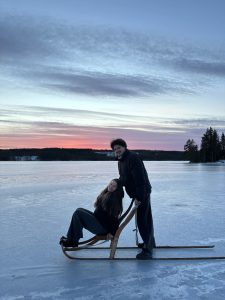
Instead of nightlife, they focus on activities that many wouldn’t associate with Erasmus at all. Their days depend on the weather, schoolwork, and their energy levels. During winter, they went ice skating on frozen lakes, cross-country skiing, or snowboarding. They also regularly go to the gym, which is cheaper than in the Czech Republic and includes a pool, sauna, group classes, and even unlimited coffee.
“Every day, we try to do something for our bodies, cook good food, and make our stay as enjoyable as possible,” they say.
Erasmus as a Test of a Relationship
Living abroad together has deepened their relationship. “You only have each other here, and you have to rely on one another,” Jirka says.
Iva highlights how Jirka surprised her in unexpected situations. During their stay, they faced several car-related issues—from a parking accident to a broken headlight and even a cracked windshield. “Jirka managed everything calmly and fixed what he could on the spot,” she says.
They both agree that being on Erasmus as a couple is easier for them. They are used to living, working, and studying together. “For couples who are not used to spending so much time together, it might be more challenging,” they add.
Sweden: Calm, but Reserved
However, integrating with locals is not always easy. “It’s definitely not easy. Swedes let people in only after some time,” they explain, referring to their experience working on a school project with Swedish classmates. Communication improved gradually, but it required patience.
They were also surprised by the study system. They attend campus only two days a week, with the rest of their classes held online or based on independent work. Attendance is not strictly required, but the workload at home is significant—around 16 hours per week per subject.
“We spend more time studying at home than at school,” they summarize.
An Experience to Remember
While academics are important, they agree that Erasmus is mainly about life in a different country and the experiences that come with it.
“Dog sledding, the Northern Lights, ice skating on frozen lakes, cold-water swimming—these are the moments we’ll remember the most,” they say.
What impressed them the most was the Swedish winter itself. “Snow-covered landscapes, frozen lakes, and sunshine—it feels almost like a fairytale,” they describe.
They also embraced the Swedish tradition of “fika”—a daily pause with coffee and something sweet, representing a moment to slow down and enjoy the present.
Not Everything Is Perfect
Of course, not everything met their expectations. They were disappointed with Swedish trains, which they found outdated and unreliable. “One time our connection north was canceled, and another time we had a three-hour delay,” they recall.
And then there are the cultural surprises—like sauna etiquette. “People go in without towels, with their phones, or even with a milkshake,” they say with a laugh.
Erasmus Without Templates
In the end, they have a clear message for other students—especially couples: don’t let others define what your Erasmus should look like.
“Both of you should think about how you want to experience Erasmus and not be influenced by ideas of what a ‘proper Erasmus’ should be,” Jirka says.
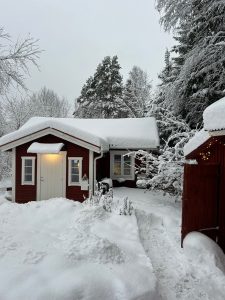
Iva adds a practical tip: don’t settle for the easiest option, especially when it comes to accommodation. Thanks to that approach, they now live in a private house in nature—with chickens as their neighbors.