UTB Students Get a Glimpse into Brussels European School
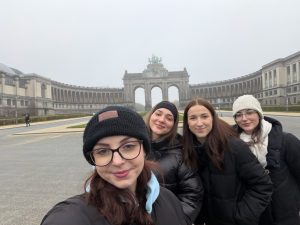
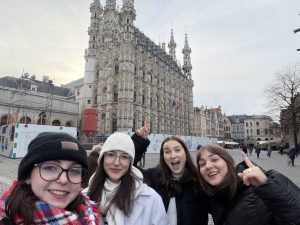
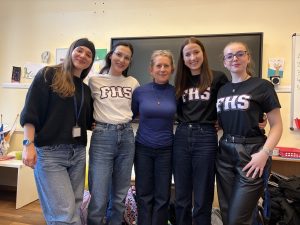
What does education look like in an international environment where dozens of nationalities meet every day? And what can such an experience bring to future educators? Two students from Tomas Bata University in Zlín, Adéla Řeháková and Sára Musilová, spent part of the winter semester on a placement at the Brussels European School. Their experiences show that it is not only an inspiration for teaching, but also a powerful personal journey.
From a University Poster to Brussels
Adéla Řeháková, a third-year student of Social Pedagogy at the Faculty of Humanities at UTB, had been considering going abroad for quite some time. As she explains, she sees it as “a great opportunity for students to gain experience in an international environment.” She learned about the Brussels European School placement through a poster at the university and a university email.
Sára Musilová, a third-year student in Primary School Teaching, followed a similar path. Originally from a small village in the Blansko region, she also discovered the opportunity at the university.
A School That Feels Like a Small City
The first days in Brussels were, for both students, full of new impressions. What surprised Adéla the most was the sheer size of the school. A single campus includes a kindergarten, primary school, and secondary school, with nearly 4,000 students in total. The school is spread across several buildings, making orientation challenging at first and sometimes even a bit chaotic.
On the other hand, she highlights the friendliness of the staff and the fact that students spend a lot of time outdoors, regardless of the weather.
Sára describes the beginning of the stay as very pleasant. Arriving early allowed them time to adjust and “get a feel for the rhythm of the city.” She mentions only minor negatives, such as occasional issues with public transport. On the positive side, she was pleasantly surprised by the weather, which was better than expected throughout the stay.
A Different Approach to Teaching
From both students’ perspectives, teaching at the European School differs mainly in its approach and organization.
Adéla observed lessons across all levels of education. She was particularly impressed by primary education, where children worked in groups (“learning nests”) and lessons were more interconnected. At lower secondary level, teaching was more often frontal, similar to the Czech system. One especially inspiring moment for her was a Maltese literature class at secondary level, where poetry analysis was carried out using creative methods, such as Dixit cards.
Sára sees the biggest difference in language teaching. English classes are conducted entirely in English, which is natural given the multicultural composition of the classes. Students from different national backgrounds—such as a Polish and a Danish student—can share the same desk. Meanwhile, instruction in language sections is conducted in students’ mother tongues, following the curriculum of their respective countries.
Multiculturalism as Everyday Reality
One of the defining features of European Schools is their multicultural environment. According to Adéla, this is reflected in everyday life—not only in lessons but also in regular interactions among students. She observed a higher level of openness and tolerance, supported by programs such as KiVa at primary level, which help children express emotions and understand others.
Sára describes multiculturalism as something “you can feel at every step.” Children naturally interact during breaks and shared activities. She particularly appreciates the so-called European Hours, when students of different nationalities and ages come together to explore cultures through games or presentations about their home countries.
Languages as an Advantage, Not a Barrier
Communication between students of different nationalities works naturally, according to both participants.
Adéla noticed that students most often communicate in English or French, and she sees linguistic diversity as an advantage. What stood out to her was their confidence—students are not afraid to speak even if they are not fluent.
Sára shares this view. English serves as the main communication language, and students often help each other with translation if needed. Students at European Schools learn multiple foreign languages during their studies, which she considers a major advantage.
Active Involvement and Personal Growth
The placement was not only about observation—both students actively participated in school life.
Adéla contributed to planning activities for Slovak language classes, helped organize a school carnival, and participated in a questionnaire survey focused on students’ emotional intelligence.
Sára took part in teaching English, art, and a subject similar to primary education studies. This experience helped her overcome hesitation when speaking in a foreign language and rethink her approach to lesson planning. She realized that it is not necessary to plan every minute, and that even a single high-quality text or image can sustain a meaningful and engaging lesson.
Moments That Stay With You
Both students also take away strong personal memories from Brussels.
For Adéla, one of the most powerful moments was the school carnival. A class she helped prepare ended up winning, even though the students themselves were not satisfied with their performance. Their joy afterwards was immense, and one student personally came to thank her—something she describes as deeply meaningful.
Sára, on the other hand, was deeply moved by meeting a young student who, despite a serious health condition, radiated positivity and energy. This encounter led her to reflect on her own values and realize how minor many of her everyday concerns are.
An Experience Worth Recommending
Both students agree that they would strongly recommend such an experience.
Adéla sees it as valuable both professionally and personally, especially for those considering working in European Schools or wishing to gain international experience and improve their language skills.
Sára adds that it is ideal for anyone who wants to grow as a teacher, step out of their comfort zone, and explore new environments. She herself would not hesitate to go again.